Job Hive
Project Introduction
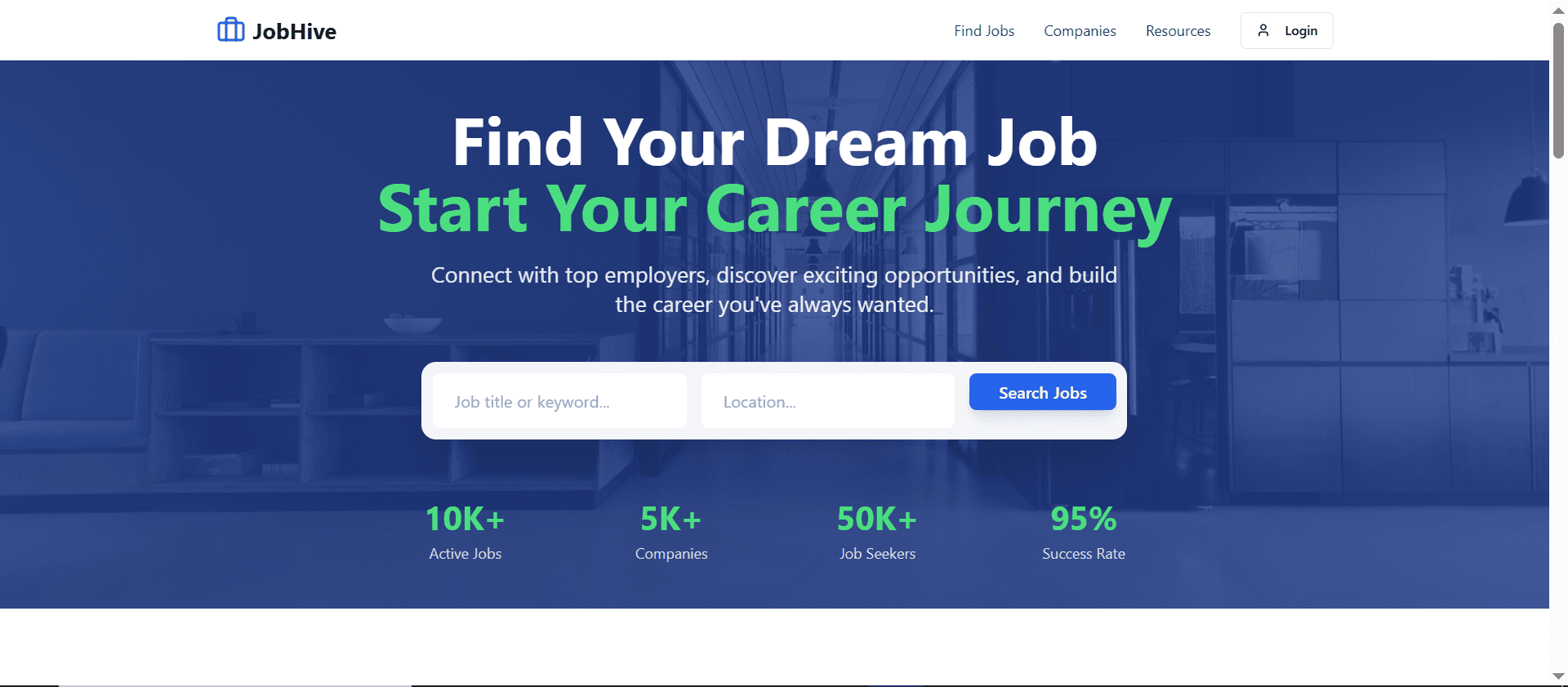
Job Hive bridges the gap between startups seeking top-tier talent and developers looking for meaningful opportunities. The platform provides a streamlined experience for posting roles, managing applications, and discovering high-quality candidates in one unified workspace.
Built with a Human-First approach, the interface prioritizes clarity and accessibility so both employers and applicants can navigate complex hiring workflows without friction. Every screen was designed to reduce cognitive load while surfacing the data that matters most.
Tech Stack
Key Learnings
Performance Optimization at Scale
Implemented advanced server-side rendering and incremental static regeneration to keep job search queries fast even as the platform grew to thousands of active listings. Critical listing pages were pre-rendered at build time while dynamic filters and pagination were handled on the server to minimize client-side load. Database queries were indexed and batched to avoid N+1 patterns when fetching employer dashboards and applicant profiles. The result was consistently sub-second page loads across search, detail, and dashboard views under realistic production traffic.
Accessibility First Architecture
Gained deep expertise in WCAG 2.1 compliance by auditing every interactive element—from job filters and application forms to employer management panels. Semantic HTML landmarks, ARIA labels, and keyboard-navigable focus order were applied throughout so screen reader users could complete full hiring workflows without barriers. Color contrast ratios and touch target sizes were validated against accessibility standards on both desktop and mobile breakpoints. Building accessibility in from the start reduced rework and ensured the platform remained inclusive for all users.
Data Modeling Complexity
Navigated the challenges of designing a relational schema that supports both enterprise recruiters and individual job seekers within a shared multi-tenant architecture. Role-based permissions, application state machines, and employer-team hierarchies required careful normalization to avoid data duplication and orphaned records. Prisma ORM migrations were used to evolve the schema safely as new features like saved searches and interview scheduling were added. The final model balanced query performance with the flexibility needed for future SaaS feature expansion.